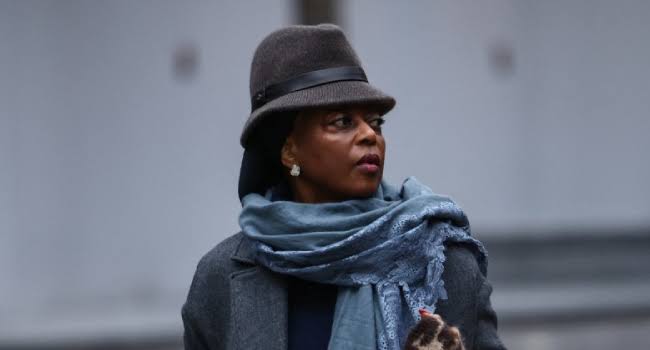
Proceedings resumed on Monday in London in the corruption and bribery trial of former Nigerian Minister of Petroleum Resources, Diezani Alison-Madueke.
Jurors heard detailed evidence of an alleged trail of extravagant spending at a luxury antiques store in the British capital.
Prosecutors told the court that as much as £140,000 was spent in a single day on high-end furniture, bespoke lighting, and decorative art, allegedly paid for through intermediaries during her time in office.
The public gallery was filled with supporters from the Ijaw community, many of whom had flown in specifically for the hearing.
Alison-Madueke has denied multiple charges relating to alleged misconduct while overseeing Nigeria’s oil and gas sector. However, prosecutors claim she received cash and luxury benefits in exchange for influence over energy contracts.
The case has major implications for accountability in the global energy industry.
Lawyers for Alison-Madueke, the first woman to serve as President of the Organisation of Petroleum Exporting Countries (OPEC), denied in a London court on Thursday that the former minister took bribes, marking their first formal response at the trial.
The 65-year-old, who sat in the dock at Southwark Crown Court taking notes on the third day of proceedings, is accused of multiple counts of bribery stemming from a years-long investigation.
The alleged offences are said to have occurred between 2011 and 2015, when she served as Nigeria’s oil minister while maintaining a residence in the United Kingdom.
The UK National Crime Agency (NCA), which tackles international and serious organised crime, alleges that she received bribes while in Britain.
Prosecutors earlier claimed Alison-Madueke lived a “life of luxury” funded by individuals seeking lucrative oil and gas contracts with Nigeria’s state-owned petroleum corporation.
However, defence lawyer Jonathan Laidlaw told the jury that “a great deal of material which would have established her innocence had been denied to her” due to what he described as a “gross delay in bringing these charges”.
“She has been denied the opportunity to travel back to her home in Nigeria to prepare her defence,” Laidlaw said, noting that British authorities had retained her passport since her arrest 11 years ago.
Laidlaw added that Nigerian ministers are forbidden from holding bank accounts abroad and argued that documents kept in Nigeria or by government officials would have shown that accommodation and purchases made for her in the UK were later reimbursed from Nigeria.
However, he said that more than a decade later, those records had disappeared, adding that “material critical to her defence is now no longer available”.
Alison-Madueke is accused of accepting “financial or other advantages” from individuals linked to Atlantic Energy and SPOG Petrochemical groups, both of which secured contracts with the Nigerian National Petroleum Corporation (NNPC) or its subsidiaries, according to prosecutors.
She is also alleged to have received £100,000 ($137,000) in cash, chauffeur-driven cars, a private jet flight to Nigeria, as well as refurbishment work and staff costs at several London properties.
Other charges allege she received school fees for her son, goods from luxury retailers including Harrods and Louis Vuitton, and additional private jet flights.
Alison-Madueke, who served as OPEC president between 2014 and 2015, has faced multiple legal cases globally, including in the United States.
She has been on bail in the UK since her arrest in October 2015 and was formally charged in 2023, charges she continues to deny.
Two others — Doye Agama, her brother, and Olatimbo Ayinde — are also standing trial on related bribery charges. Prosecutors say all three defendants had UK addresses at the time of the alleged offences.