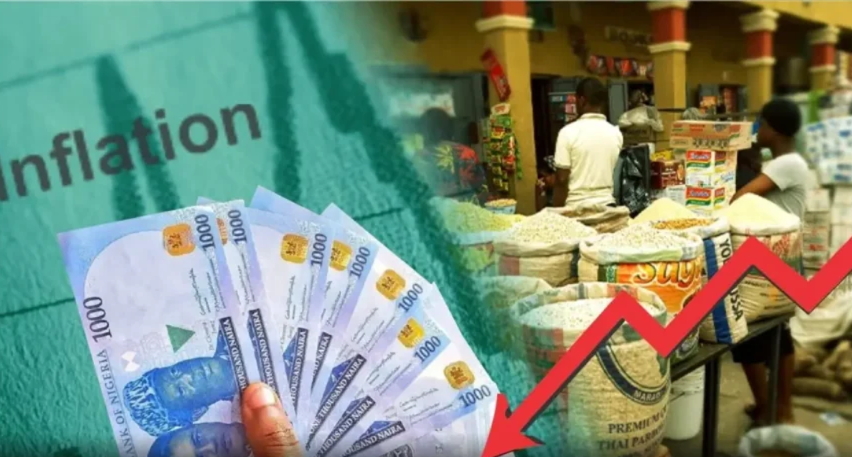
Nigeria’s headline inflation eased slightly to 15.10 per cent in January 2026, down from 15.15 per cent in December 2025, the National Bureau of Statistics (NBS) said on Monday.
At its previous release, the NBS adopted a revamped methodology, which it said better reflects real-world prices.
The latest data comes ahead of the Monetary Policy Committee meeting of the Central Bank of Nigeria (CBN), scheduled to be held between February 23 and 24, 2026.
The statistics office noted in its report that January’s headline inflation rate declined by 0.05 percentage points compared to December 2025.
On a year-on-year basis, inflation fell by 12.51 percentage points from the 27.61 per cent recorded in the corresponding period last year.
Month-on-month, headline inflation stood at 2.88 per cent, compared to 0.54 per cent in December 2025, indicating a faster rise in average price levels relative to the previous month.
Food inflation, which accounts for the largest share of household spending, recorded a sharp decline in January.
On a year-on-year basis, food inflation dropped to 8.89 per cent, down 20.73 percentage points from 29.63 per cent in January 2025.
Month-on-month, food inflation rose to 6.02 per cent, compared to 0.36 per cent in December 2025.
The NBS attributed the reduction to falling prices of key food items, including water yam, eggs, green peas, groundnut oil, soya beans, palm oil, maize, guinea corn, beans, beef, melon (egusi), cassava tubers, and white cowpeas, among others.
The 12-month average food inflation rate eased to 20.29 per cent in January 2026, down from 38.47 per cent a year earlier.
Core inflation, which excludes volatile agricultural produce and energy, stood at 17.72 per cent on a year-on-year basis in January 2026, down from 25.27 per cent in January 2025.
Month-on-month, core inflation increased to 1.69 per cent, compared to 0.58 per cent in December 2025.
The 12-month average core inflation rate eased to 22.84 per cent from 27.24 per cent recorded in January 2025.
Urban inflation fell to 15.36 per cent year-on-year during the period under review, down from 29.45 per cent in January 2025, while month-on-month urban inflation stood at 2.72 per cent.
The 12-month average urban inflation rate, however, rose to 22.30 per cent.
In rural areas, inflation stood at 14.44 per cent year-on-year, down from 25.04 per cent a year earlier.
Month-on-month, rural inflation rose to 3.29 per cent, while the 12-month average declined to 21.03 per cent from 30.79 per cent in January 2025.